Weißenfels
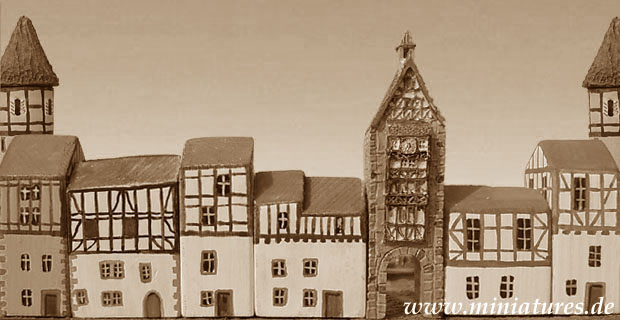
Weißenfels, a city (urban district) in the [former] Prussian administrative district of Merseburg, situated on the Saale River and serving as a junction for the Bebra-Weißenfels, Berlin–Weißenfels, and Weißenfels–Zeitz state railway lines; elevation 102 m above sea level. It features two Protestant churches and one Catholic church, a monument to Emperor Wilhelm I, a Bismarck Tower, a secondary school (“Oberrealschule”), a Protestant teacher-training college, an institute for the deaf and mute, a museum, a local court, a mining district office, and a Reichsbank branch. Industries include mechanical shoe factories (employing 4,500 workers), a paper mill, a nail and chain factory, an iron foundry and machine factory, factories for drums, rubber goods, and sugar, a power plant, a fur-dressing facility, and organ-building workshops. There are also lignite mines with facilities for producing lignite-briquette coke (“Grudekoks”), as well as fishing operations. The population in 1905 was 30,894, including 1,175 Catholics and 103 Jews.
Also located here is the extensive castle complex situated on a sandstone cliff—the New Augustusburg (built 1664–90) — formerly a royal residence and now a non-commissioned officer training school. The crypt beneath the castle chapel holds the remains of several princes and the viscera of Gustav Adolph of Sweden.
Weißenfels was a subject of dispute between Thuringia and Meissen around 1200; shortly thereafter, it passed to the House of Wettin, and following the partition of 1485, it fell to the Albertine line. In the Treaty of Weißenfels (July 1, 1249), Margrave Henry the Illustrious of Meissen secured recognition of his title as Landgrave of Thuringia. From 1656, the city served as the residence of the Dukes of Saxe-Weißenfels – a cadet branch of the Electoral House of Saxony founded by Augustus, the second son of Elector John George I, which became extinct upon the death of John Adolphus II in 1746 (see the genealogical table in the article "Wettin"). In 1814, Weißenfels passed to Prussia.
Bibliography
- Gerhardt: Geschichte der Stadt Weißenfels (Weißenf. 1907)
- Mensch: Die Finanzwirtschaft der Stadt Weißenfels im 19. Jahrhundert (Halle 1907)
- Sturm: Chronik der Stadt Weißenfels (Weißenf. 1846, Auszug 1869)
Source: Meyers Großes Konversations-Lexikon, 6. Auflage 1905–1909