Beja
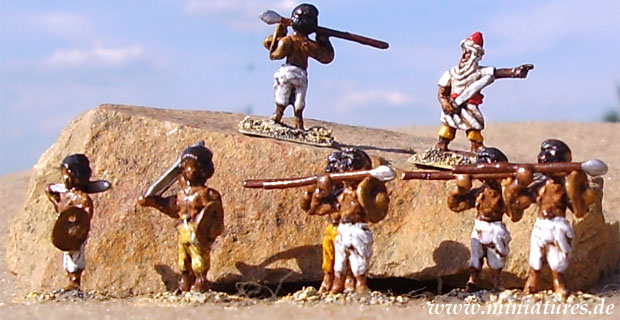
Beja (Beduan, meaning “desert dwellers”, Budja, Bischarin), a people in the land of El Beja, i.e., in the lands east of the Nile, from 24° northern latitude southward to Abyssinia (see map “Egypt”), who are considered part of the Bedouins. The Beja are of medium height, slender, and well-educated, relatively fair-skinned with a straight, usually pointed nose, brown, almost completely straight hair, very unclean, anoint themselves with butter or mutton tallow, and have very loose marriage practices. As nomads, they breed dromedaries, horses, gorse cattle, sheep, and goats; they practice almost no agriculture. Their language, To-Bedschauijeh, Tu-Bedawie, first made known through Munzinger‘s “East African Studies” (Schaffhausen 1864), belongs to the Ethiopian (southern) group of Hamitic languages (cf. Almquist, The Bishari Language, Uppsala 1881–85, 2 vols.). The Beja people include the Ababde tribes in Nubia, among whom the Beja language is heavily mixed with Arabic; the Beni Amer in Eritrea and eastern Sudan; the Bischarin south of Ash-Shalatin; the Hadendoa, Hallenga, and Hamran, who roam as far as Suakin; and the Hedareb in Sudan, Egypt, and Eritrea. The Beja are probably descendants of the ancient Blemmyes. In the early Middle Ages, they formed the Jacobite Christian state of Aloah, with its capital Sobah on the Blue Nile.
Bibliography
- Hartmann: Die Bedscha (in der »Zeitschrift für Ethnologie«, 1882)
Source: Meyers Großes Konversations-Lexikon, 6. Auflage 1905–1909