Muslim Warriors
ESCI 1:72 Scale Figure Review
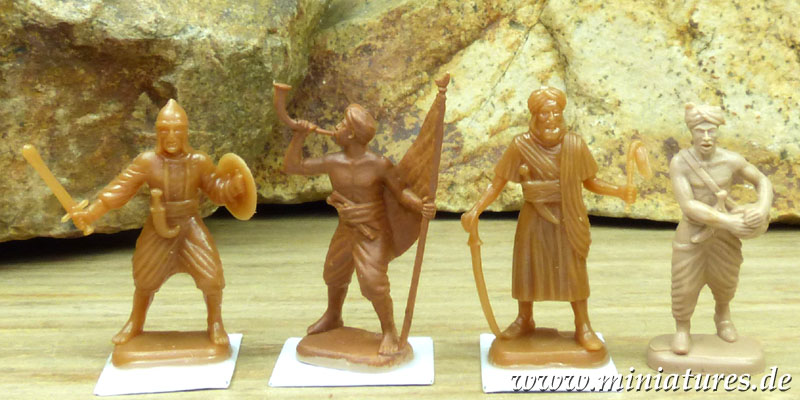
ESCI 1:72 scale Muslim Warriors are a strange mix of Beja, Berbers, Tuareg, Afghans, and Arabs from various historical periods, who never actually fought alongside each other. The figures are suitable for campaigns of the late 19th and early 20th centuries in North Africa, the Sudan, Somalia, and Afghanistan.
Contents
50 Figures in 15 Poses – 24 mm Height equal 173 cm
- Mahdi in Dschibba (1)
- Ansar Emir with Helmet (3)
- Ansar Standard-Bearer (1)
- Ansar Drummer (1)
- Ansar/Pirate with Blunderbuss Pistol and Dagger (3)
- Ansar with M.1888 Magazine Lee-Metford Rifle, kneeling, firing (6)
- Ansar with M.1888 MLM Rifle, advancing (3)
- Hadendoa (Fuzzy-Wuzzy) with Sword and Shield (3)
- Berber in Thobe with Dagger (1)
- Berber with Kilij curved scimitar (6)
- Berber/Tuareg with Kilij und Adarga (6)
- Pashtun with Jezail, standing, firing (6)
- Pashtun with Jezail, advancing (6)
- Pashtun with pesh-kabz Khyber Knife, charging (3)
- Arab with Revolver, 20th Century (1)
Evaluation
Excellent choice of subject, the muslim warriors are suitable for campaigns in North Africa, the Sudan, Somalia, and Afghanistan. The figures are nicely detailed. Faces, folds in the clothing, weapons, and equipment are properly sculpted and easy to paint. Satisfactory casting quality, but noticeable mould lines on rifle muzzles are difficult to remove.
Excellent historical poses. Standing, advancing, charging, and shooting warriors can be beautifully combined in dioramas and wargames. Unfortunately, the Mahdist turbans are missing the loose end of the fabric strip that hung behind the left ear and down over the shoulder. The figures are compatible with colonial troops and warriors from Airfix, Revell, Reviresco, and HäT Industrie.
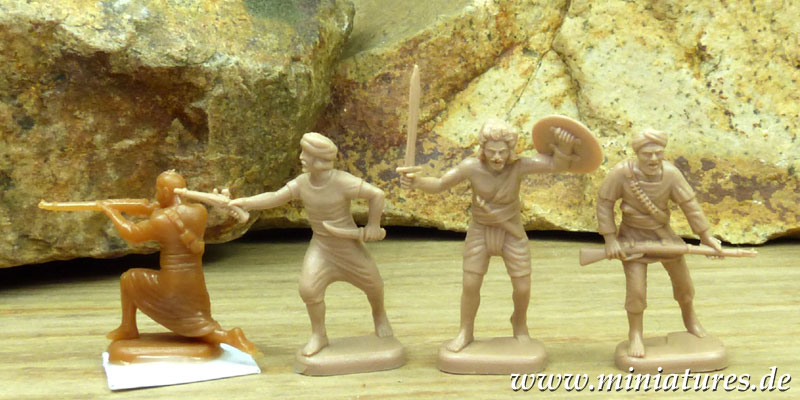
The front of the box depicts attacking Mahdists, but only eight of the fifteen figure poses are Ansar from the first or second Mahdist uprising, 1882–1884 and 1896–1898, in Sudan. Since their victory at the Battle of al-Ubayyid (El Obeid), November 3–5, 1883, the Mahdists had access to modern M.1867 Remington Rolling Block breech-loading rifles, yet ESCI has not provided any of the Muslim warriors with this rifle. Instead, two Ansar are armed with the Magazine Lee-Metford (MLM) repeating rifle, newly introduced to the British Army in 1888, which, if captured at all, could hardly have been acquired in the numbers suggested here.
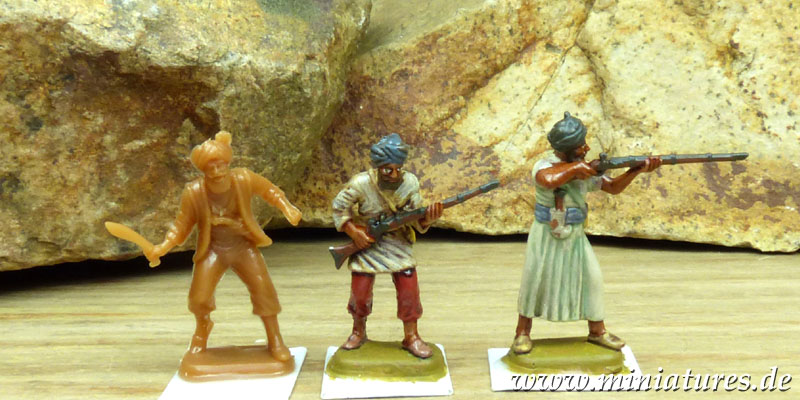
The three Pashtuns and three Berbers/Tuareg in this box each deserved their own complete figure sets, and the lone 20th century Arab certainly did, too. It‘s a shame that ESCI missed these opportunities. In any case, most of these figures are unsuitable as potential adversaries for the ESCI 1:72 scale French Foreign Legion.
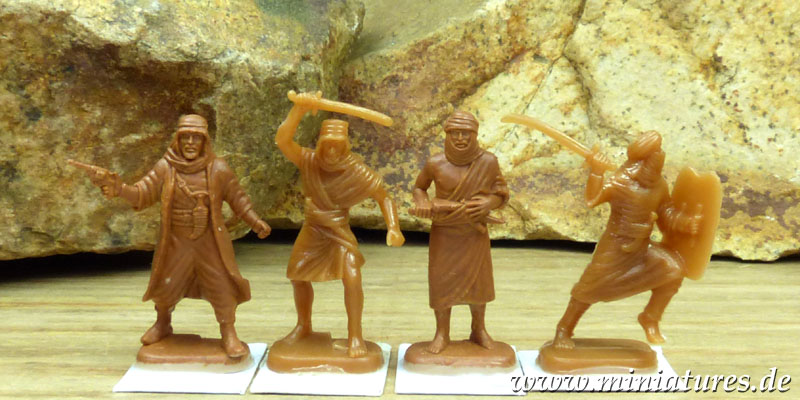
The Arab pictured on the left might represent T. E. Lawrence “of Arabia”, the archaeologist, officer, secret agent, and British military advisor to Prince Faisal bin Hussein, who led the Arab Revolt against the Ottoman Empire from 1916 to 1918.
Historical Employment
- Ansar (Mahdists) in Sudan (8 Figures), 1881–1899
- Pashtuns in Afghanistan (3 Figures), 1878–1880
- Berber/Tuareg in North Africa (3 Figures)
- Arab Revolt in World War One (1 Figure), 1916–1918
Possible Conversions
- Pirates
- Mujahideen in Afghanistan, 1979–1989
- Taliban Fighters
ESCI 1:72 scale Muslim Warriors are beautifully sculpted and look really good after painting. Typical opponents include British, Indian, French, and Italian colonial soldiers, as well as Soviet soldiers and ISAF troops in Afghanistan.